Project Mercury
America's First Human Spaceflight Program
Program Overview
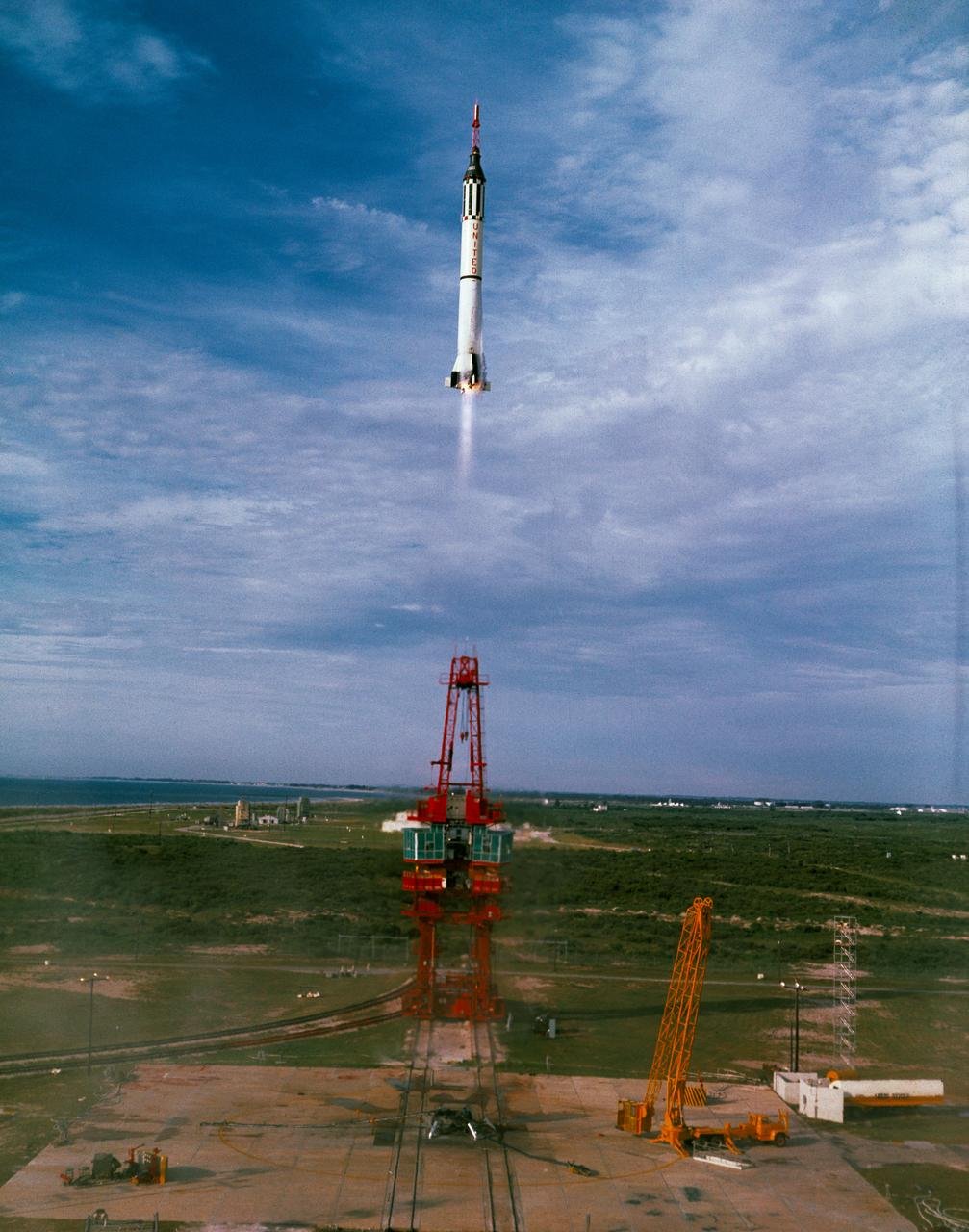
Project Mercury was the first human spaceflight program of the United States, running from 1958 through 1963. Its primary goal was to put a human into Earth orbit, observe their capability to function in space, and recover them safely. Initiated during the height of the Cold War Space Race, the program transitioned NASA from a research aeronautics organization into a space exploration agency. Through six crewed flights, Mercury established the fundamentals of space flight, pilot training, launch operations, and ground control tracking network that paved the way for Gemini and Apollo.
Archival Image
Missions & Launches
Crewed Flight Log
Mercury-Redstone 3 (Freedom 7)
1961-05-05
Success
Details
Mercury-Redstone 4 (Liberty Bell 7)
1961-07-21
Success
Details
Mercury-Atlas 6 (Friendship 7)
1962-02-20
Success
Details
Mercury-Atlas 7 (Aurora 7)
1962-05-24
Success
Details
Mercury-Atlas 8 (Sigma 7)
1962-10-03
Success
Details
Mercury-Atlas 9 (Faith 7)
1963-05-15
Success
Details
Uncrewed / Robotic Log
Mercury-Redstone 1
1960-11-21
Success
Details
Mercury-Redstone 1A
1960-12-19
Success
Details
Mercury-Redstone 2
1961-01-31
Success
Details
Mercury-Atlas 1
1960-07-29
Success
Details
Mercury-Atlas 2
1961-02-21
Success
Details
Mercury-Atlas 3
1961-04-25
Success
Details
Mercury-Atlas 4
1961-09-13
Success
Details
Mercury-Atlas 5
1961-11-29
Success
Details